Pallets
Thermoformed Pallets: How They Are Made and How They Differ From Wood Pallets
Heat and EPS versus boards and nails. How the manufacturing process decides your pallet's weight, moisture, surface and paperwork at the border.
Read Article
BlogPallets
A pallet is the base that turns loose boxes into one unit load a forklift moves at once, keeps the product off the floor and defines how much fits in a truck.
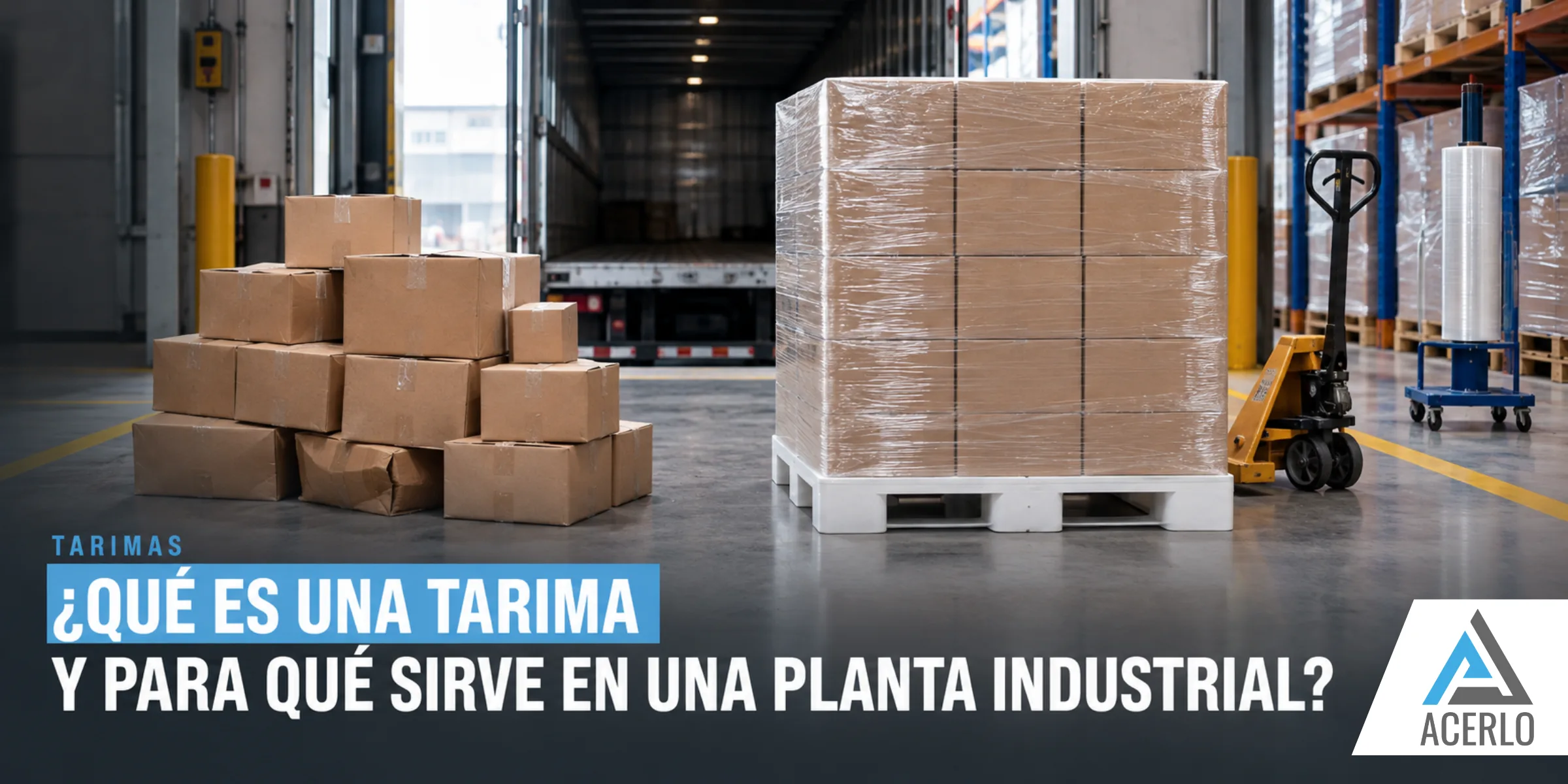
A plant in Apodaca starts up a new line and the first order ships on a Friday afternoon. The pallets ran out on Thursday, so the shipping supervisor decides to set the boxes directly on the trailer floor, tightly stretch-wrapped, to keep the delivery appointment. The truck reaches the customer's dock in Laredo at six in the morning and the forklift has nowhere to put its forks.
Four people unload by hand for six hours. The boxes at the bottom arrived crushed under the weight of the ones above, the customer rejects 180 units and the carrier bills the trailer's waiting time. On Monday, the plant manager discovers that the whole problem fit in one word nobody had put on the purchase order: pallet.
In logistics, a pallet is a flat platform with clearance underneath so a forklift or a hand pallet jack can lift it with everything on top. That simple definition hides the function that holds a plant together: without a pallet, every box is a loose piece someone has to carry by hand; with a pallet, a hundred boxes become a single unit that moves in thirty seconds.
A forklift does not lift boxes, it lifts pallets. Its forks enter through the openings in the base, raise the whole platform and carry it to the rack, the dock or the truck. That makes the pallet the piece that links your warehouse to transportation: the same unit load you build on your packing line is the one the customer receives at their dock, with nobody touching a box along the way.
When that unit does not exist, as in the Apodaca plant, the cost shows up in labor hours, damaged product and missed delivery appointments. We have seen plants lose a customer over a single badly built shipment, with product in perfect condition that arrived in a state the receiving dock could not handle.
The pallet's second function is to separate the product from the floor. A box set directly on concrete absorbs moisture, gets stained and takes every knock of the operation. On a pallet, the product travels a few inches off the ground, stretch film holds it firm as one block and corner boards protect the edges. The pallet also spreads the weight of the load: the bottom boxes support the ones above on a flat surface instead of sinking into an uneven floor.
For a plant, this means less handling damage and faster receiving on the customer's side. A palletized shipment is counted, checked and put away in minutes; a loose shipment is counted box by box.
Every pallet shares the same basic anatomy, even when the material changes. Knowing it helps you order the right one and spot the one that is no longer safe before it fails with a load on top.
The deck is the surface the product rests on. On a wood pallet it is made of separate boards nailed to stringers or blocks; on a thermoformed plastic pallet, like the Stiropallet we manufacture in Santa Catarina, the deck is a single smooth piece with no nails or joints. Below the deck are the supports that raise the platform off the floor and leave the entries for the forklift's forks or the wheels of the hand pallet jack.
If a deck board is broken or a nail sticks out, the pallet tears the stretch film and the boxes, and in food or pharmaceutical plants a splinter in the load can get the whole lot rejected at the receiving audit. That is why it pays to inspect pallets before each use, the same way you inspect the stretch film or the strapping.
Every pallet has a static load capacity, the weight it supports resting on the floor without moving, and a dynamic load capacity, the weight it supports while a forklift or pallet jack lifts and carries it. The dynamic rating is always lower, because the platform is supported only by the forks and takes the movements of the equipment.
On the standard-size Stiropallet (39.4 × 47.2 in, or 100 × 120 cm) the static load is up to 4,400 lb (2,000 kg) and the dynamic load is 1,760 lb (800 kg). Those are the two numbers you compare with the real weight of your loaded pallet before approving a packaging change. If your load exceeds that range or your operation stores on racks, we review it with you from the quote stage.
The pallet size decides how many fit in a truck, how they are arranged and whether the customer can receive them on their racks. Choosing it out of habit, or because it was what was sitting in the yard, is one of the most frequent mistakes we find in plants that are starting to export.
In Mexico the most common size is 39.4 × 47.2 in (100 × 120 cm); we manufacture the Stiropallet in that same footprint, 5.3 in (13.5 cm) high. In the United States the most common pallet is 40 × 48 in, and many distribution centers north of the border require it because their racks and automated lines are set up for it. Before you fix your pallet size, ask your customer which one their dock accepts; it is a five-minute question that avoids a complete repack at the border.
Once the size is set, the number of pallets per trailer and their arrangement (straight, turned or mixed) come from the load plan you build with your carrier. The total height of the loaded pallet and the weight per pallet come into it too, because a trailer fills up by weight before it fills up by space when you move dense product. What matters for your plant is that pallet size, load height and stretch wrap are defined together, not one at a time as orders go out.
The question of what a pallet is becomes practical the moment you choose the material. In our experience, the decision depends on three things: where the load is going, what the receiving customer requires and how many times the pallet will travel.
A 39.4 × 47.2 in wood pallet weighs 33 to 55 lb (15 to 25 kg), and because wood is porous, it gains weight in the rainy season if you store it outdoors. To cross into the United States, the international ISPM 15 standard also requires heat treatment or fumigation and a visible IPPC stamp on the pallet; without them, customs can send the whole shipment back. The Stiropallet weighs 9.9 lb (4.5 kg) in the same footprint, does not absorb moisture and falls outside ISPM 15, because the standard applies only to wood.
In air freight, where cost is calculated per pound, that weight difference is charged on every shipment. We explain it with figures in our article on what each pallet weighs and what it costs to ship.
Food, pharmaceutical and electronics plants usually keep wood pallets out of their clean areas because of the splinters, nails and pests they can carry. The Stiropallet has a smooth, non-porous, water-resistant surface that is easy to clean, and it is used precisely in those industries and in international logistics. If your customer asks for a pallet that sheds no splinters and can be washed, the material is already decided.
Before calling your supplier, gather five pieces of data that already exist in your plant. With them, the quote comes out right the first time and the pallet that arrives is the one your operation needs:
At ACERLO we quote from your product dimensions, your monthly quantity and the destination; a drawing or a photo of the load speeds up the proposal. We manufacture Stiropallet plastic pallets at our plant in Santa Catarina and deliver in 3 to 5 days near Monterrey, and in 5 to 10 days in the rest of Mexico and in the United States. If you also need corrugated plastic dunnage or woven polypropylene sacks for the same shipment, all your packaging is quoted together and arrives together.
A pallet is the base of every unit load that leaves your plant, and choosing it with the weight, the destination and the customer's requirements in hand prevents the shipment nobody can unload. If you want to review which pallet suits your operation, send us your dimensions, your monthly volume and your destination, and at ACERLO we will reply with the proposal for your packaging.
Frequently Asked Questions
In practice, none for most loads. Tarima is the name used in Mexico; pallet is the term in the United States, and a skid usually means a pallet with no bottom deck. On purchase orders with U.S. customers, use pallet and give the size in inches.
It depends on the material and the design. The 39.4 × 47.2 in Stiropallet holds up to 4,400 lb (2,000 kg) of static load, resting on the floor, and 1,760 lb (800 kg) of dynamic load while a forklift or pallet jack moves it.
Only if they are wood: ISPM 15 requires heat treatment or fumigation and the IPPC stamp. The Stiropallet falls outside that standard and crosses with no treatment, no stamp and no phytosanitary paperwork.
Keep Reading
Heat and EPS versus boards and nails. How the manufacturing process decides your pallet's weight, moisture, surface and paperwork at the border.
Read ArticleAn industrial pallet is bought with a spec sheet. The data it carries and when you need it: racking, export, clean areas, returnable packaging and audits.
Read Article24 to 28 pallets of 39.4 × 47.2 in per level, depending on the pattern, and up to twice that double stacked. The math with width, height and weight.
Read ArticleTarima in Mexico, pallet in English, palet in Spain. The sizes and units each name carries and how to write the pallet on a purchase order.
Read ArticleWood or Stiropallet, two or four-way entry, one-way or returnable, 100 × 120 cm or 40 × 48 in. How to choose a pallet by the load.
Read ArticleRequest a Quote
Send us your dimensions, monthly volume, and destination, and we will reply with pricing.