Packaging
Types of Industrial Packaging With Examples by Industry
Packaging is classified by function, material and number of trips. The mix each industry uses, from painted auto parts to steel coils.
Read Article
BlogPallets
At 39.4 × 47.2 in (100 × 120 cm), the Stiropallet plastic pallet takes the place of the wood one. You keep the box pattern, dividers and positions; what changes is the height, the weight, the capacity you check and the paperwork at the border.
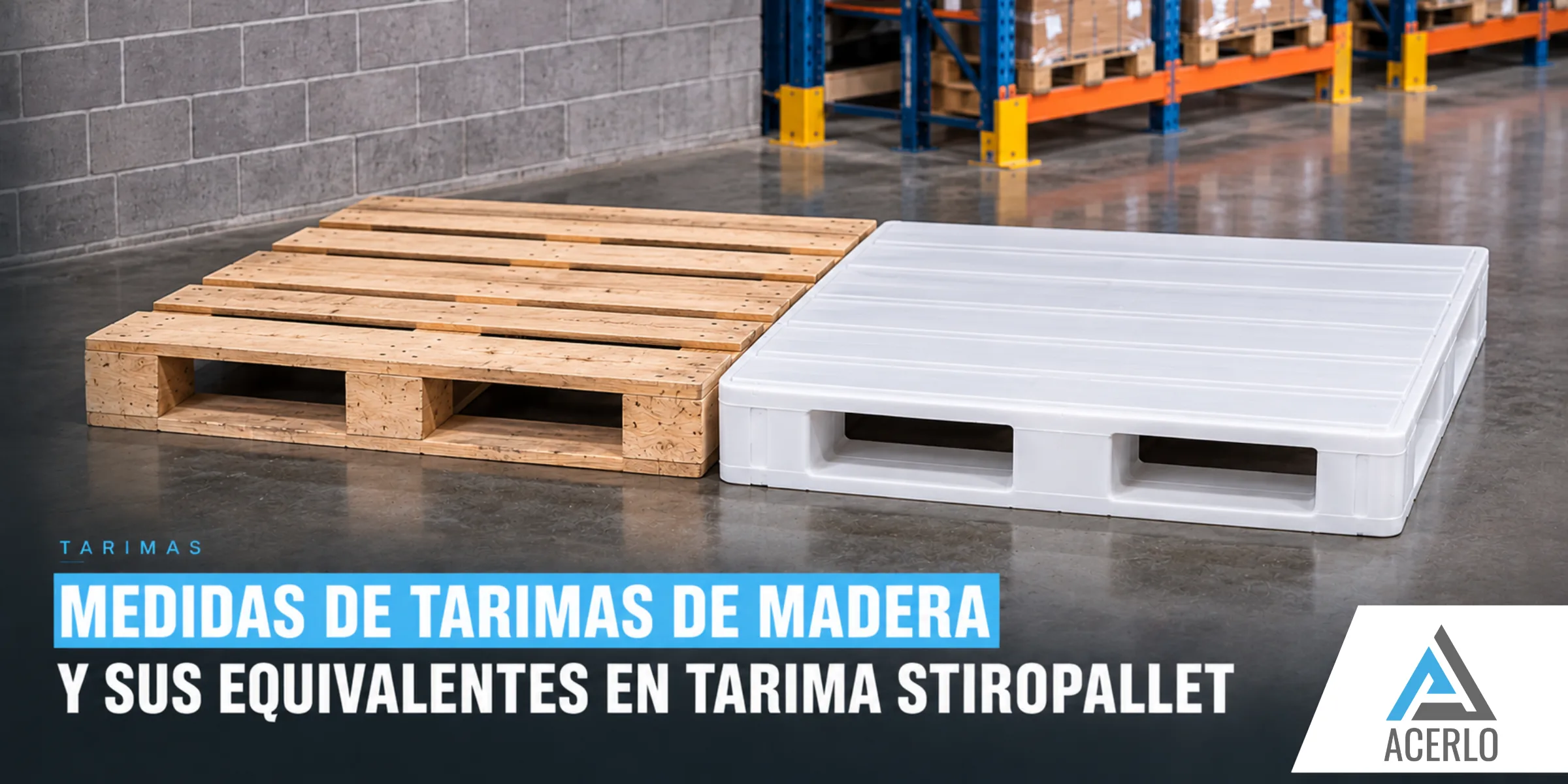
A plant that makes containers for the pharmaceutical industry has shipped its boxes on 39.4 × 47.2 in (100 × 120 cm) wood pallets for years. Its customer has asked twice for a pallet with no wood, and the plant keeps putting it off. Shipping estimates that switching pallets means redoing box patterns, dividers, load plans and the packaging specs for forty part numbers, and nobody in the department has those weeks to spare.
During the rainy season, a lot reaches the customer's receiving dock on damp wood pallets. The boxes on the bottom layer soak up the moisture, stain and warp, and quality rejects the entire lot. The customer gives the plant thirty days to switch pallets or find another supplier. With the size in hand, the plant finds that the 39.4 × 47.2 in (100 × 120 cm) Stiropallet plastic pallet keeps the deck, the box pattern and the positions in the truck.
Many plants stay with wood pallets because they associate a change of material with a complete packaging redesign. The packaging spec, the box pattern, the dividers, the load plan and the shipping labels all seem to depend on the pallet, and changing it sounds like weeks of work for quality, the warehouse and shipping.
That review depends on a single figure, the deck size. If the new pallet has the same deck as the wood one, most of those documents stay the same, and the work comes down to five figures that do change.
The deck is the surface the load rests on, length by width. It sets the boxes per layer, the size of the dividers, the pallet's footprint in the rack and the positions on the truck floor. That is why the first step is to measure the deck of the wood pallet you use today with a tape measure and write down the unit.
We manufacture the Stiropallet plastic pallet thermoformed from expanded polystyrene (EPS), in a standard size of 39.4 × 47.2 × 5.3 in (100 × 120 × 13.5 cm). Using that size as the reference, this is how the wood pallets we find most often at plants across Mexico translate.
It is the most widely used wood pallet in Mexico and the one with a direct equivalent. Our Stiropallet plastic pallet has a 39.4 × 47.2 in (100 × 120 cm) deck, the same as the wood pallet, and is 5.3 in (13.5 cm) tall. It also matches the 47.2 × 39.4 in (1200 × 1000 mm) base of our industrial crates with dividers, so pallet and crate form a single unit load.
The 48 × 40 in American pallet measures 121.9 × 101.6 cm, about 0.8 in (2 cm) more per side than the 39.4 × 47.2 in (100 × 120 cm) pallet. Our standard size is 39.4 × 47.2 in (100 × 120 cm), so the switch depends on what your customer accepts. If its receiving is manual and its rack has clearance, ask whether it accepts 39.4 × 47.2 in (100 × 120 cm) and keep the answer in writing. If its line requires exactly 48 × 40 in, include that in your quote request.
The 47.2 × 31.5 in (120 × 80 cm) euro pallet, the 47.2 × 47.2 in (120 × 120 cm) square pallet for drums and custom sizes built for a specific part fall outside our standard size. For these sizes, send us the dimensions of your wood pallet, of your product and of what your customer's rack accepts, with a drawing or a photo, and we review it in the quote.
In short, this is how the equivalent works out based on the wood pallet you use today:
With the same 39.4 × 47.2 in (100 × 120 cm) deck, these three parts of your spec stay the same.
Boxes per layer depend on the length and width of the deck. If the deck does not change, the box pattern, the number of boxes per layer and the size of the corrugated plastic dividers stay as they are. Crates with a 47.2 × 39.4 in (1200 × 1000 mm) base also sit the same way, and the parts that travel inside them keep their compartments.
The pallet's footprint in the rack and on the floor of the truck trailer is the same. The floor positions in your load plan do not change, and the Stiropallet plastic pallet is suitable for racking. What you do check is the height of each position, which we cover in the next section.
The deck size on your packaging spec, your purchase order and your shipping labels stays as it is. Just add the new height, the material and the empty pallet weight, so the warehouse, quality and shipping work from the same figures starting with the first shipment.
The height of a wood pallet depends on its boards and its blocks or stringers, and it varies from one supplier to another. Measure yours and compare it with the 5.3 in (13.5 cm) of the Stiropallet plastic pallet. If the wood pallet is taller, the loaded pallet gains clearance under the rack beam. If it is shorter, check the clear space in each position.
Our 39.4 × 47.2 × 5.3 in (100 × 120 × 13.5 cm) Stiropallet plastic pallet weighs 9.9 lb (4.5 kg). A wood pallet of the same size weighs 33 to 55 lb (15 to 25 kg), depending on the wood, the board thickness and the moisture it carries. On a 30-pallet shipment, the difference ranges from about 695 to 1,355 lb (315 to 615 kg). In air freight the cost is calculated by weight, and that difference lowers the bill on every shipment; the ACERLO website has a freight savings calculator to compare wood against Stiropallet with your own numbers.
The 39.4 × 47.2 in (100 × 120 cm) Stiropallet plastic pallet holds up to 4,400 lb (2,000 kg) of static load, resting on the floor, and 1,760 lb (800 kg) of dynamic load, while the forklift or pallet jack moves it. Weigh a pallet loaded with your product and compare the load with those two values. If your load in motion exceeds 1,760 lb (800 kg), note it on your quote request and we review it with you before you make the switch.
Wood is porous. It soaks up water in the rainy season, gains weight and dampens the base of the load, like the boxes that stained at the pharmaceutical customer's receiving dock. The Stiropallet plastic pallet does not absorb moisture and keeps its weight in the rain. Its surface is smooth, hygienic and nonporous, with no splinters, nails or pests, and it cleans with water. That is why it is used in food, beverages, pharmaceuticals and electronics, and at plants that do not accept wood pallets.
Every wood pallet that crosses into the United States, or into another country that applies the international phytosanitary standard known as ISPM 15, needs heat treatment or fumigation and the stamp of the International Plant Protection Convention (IPPC). The Stiropallet plastic pallet complies with ISPM 15 with no treatment, no fumigation and no stamp, because those requirements apply only to wood, and it crosses the border with no phytosanitary paperwork.
In 25 years of experience in the industry, we have seen that this switch gets solved with a desk review, with quality, the warehouse and shipping at the same table. These are the six steps we recommend:
With that review, the change of material becomes a spec update, and the new pallet goes into the rack, the truck and your customer's receiving dock in place of the old one.
At ACERLO we manufacture the Stiropallet plastic pallet in Santa Catarina in a standard size of 39.4 × 47.2 × 5.3 in (100 × 120 × 13.5 cm), reusable and suitable for racking. To get a quote, send us the dimensions of your wood pallet and your product, your monthly quantity and the destination. We deliver to your plant in 3 to 5 days near Monterrey and in 5 to 10 days in the rest of Mexico and in the United States.
Switching from wood to a Stiropallet plastic pallet of the same size keeps the deck, the box pattern and the positions in your load plan. If you want to review the equivalent for your pallets, request your quote with the dimensions of your current pallet, your monthly volume and your destination, and at ACERLO we will reply with the proposal for your packaging.
More on plastic pallets: plastic pallet manufacturer.
Frequently Asked Questions
The 39.4 × 47.2 × 5.3 in (100 × 120 × 13.5 cm) pallet, our standard size. It has the same deck as your wood pallet, so you keep the box pattern, the dividers and the positions in the rack and the truck. Check the height, because wood pallet height varies from one supplier to another.
With the same deck, floor positions stay the same. You update the height of each position, with the 5.3 in (13.5 cm) of the new pallet, and the total shipment weight, which drops because each pallet weighs 9.9 lb (4.5 kg) instead of 33 to 55 lb (15 to 25 kg).
Our standard size is 39.4 × 47.2 in (100 × 120 cm). For 48 × 40 in, ask your customer whether it accepts that size and keep its answer in writing. For 47.2 × 31.5 in (120 × 80 cm), 47.2 × 47.2 in (120 × 120 cm) or a custom size, send us your dimensions and we review them in the quote.
Keep Reading
Packaging is classified by function, material and number of trips. The mix each industry uses, from painted auto parts to steel coils.
Read ArticleTertiary packaging protects the entire load in transit. How to tell it apart from primary and secondary packaging so no layer goes without an owner.
Read Article10 boxes per layer instead of 9 and 5 layers under a 55.1 in rack. The full math with an example, from the deck to the pallets per month.
Read Article39.4 × 47.2 in for Mexico, 48 × 40 in for the U.S. and 47.2 × 31.5 in for Europe. How they differ and which one your customer's rack expects.
Read Article39.4 × 47.2 in for Mexico, 48 × 40 in for the U.S. and 47.2 × 31.5 in for Europe. The exact conversions and why height counts too.
Read Article39.4 × 47.2 in for Mexico, 48 × 40 in for the U.S., the euro pallet for Europe and the square pallet for drums. How to pick yours.
Read ArticleWeight, support, base, surface and destination. The five product facts that decide the size, load rating and material of your packaging pallet.
Read ArticleHeat and EPS versus boards and nails. How the manufacturing process decides your pallet's weight, moisture, surface and paperwork at the border.
Read ArticleAn industrial pallet is bought with a spec sheet. The data it carries and when you need it: racking, export, clean areas, returnable packaging and audits.
Read Article24 to 28 pallets of 39.4 × 47.2 in per level, depending on the pattern, and up to twice that double stacked. The math with width, height and weight.
Read ArticleTarima in Mexico, pallet in English, palet in Spain. The sizes and units each name carries and how to write the pallet on a purchase order.
Read ArticleWood or Stiropallet, two or four-way entry, one-way or returnable, 100 × 120 cm or 40 × 48 in. How to choose a pallet by the load.
Read ArticleA pallet turns loose boxes into one unit load a forklift moves at once. Its parts, its capacity and how to choose one.
Read ArticleRequest a Quote
Send us your dimensions, monthly volume, and destination, and we will reply with pricing.